
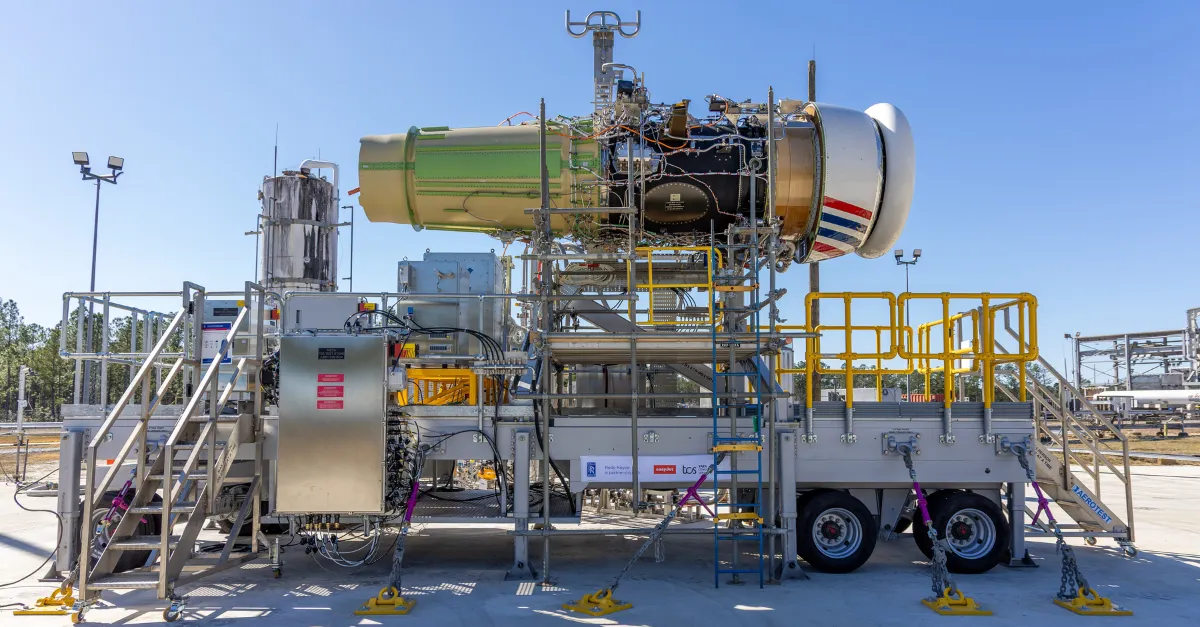
A major step forward in sustainable aviation has been reached following the successful completion of a four-year hydrogen combustion gas turbine testing programme conducted in collaboration with easyJet. The initiative focused on exploring hydrogen as a viable zero-carbon fuel alternative for future aircraft propulsion systems.
The programme concluded with a significant milestone: a modified Pearl 15 engine was successfully operated on 100% hydrogen fuel at NASA’s John C. Stennis Space Center. The testing included performance at maximum take-off thrust and across a full simulated flight cycle, demonstrating the engine’s capability to function under real-world operating conditions.
Extensive ground testing enabled engineers to validate key aspects such as combustion performance, fuel delivery systems, and engine control technologies. It also confirmed the safe handling and use of hydrogen throughout critical phases including design, commissioning, maintenance, and operational testing—marking a crucial achievement in advancing hydrogen-powered aviation.
Insights gained from the programme will contribute to the development of next-generation, fuel-flexible engine technologies, including the UltraFan® programme. The findings are expected to play a vital role in shaping future energy solutions for the aviation industry as it moves toward lower-emission alternatives. The success of the project was made possible through collaboration with partners including easyJet, Tata Consultancy Services, NASA, and the Health and Safety Executive.
