
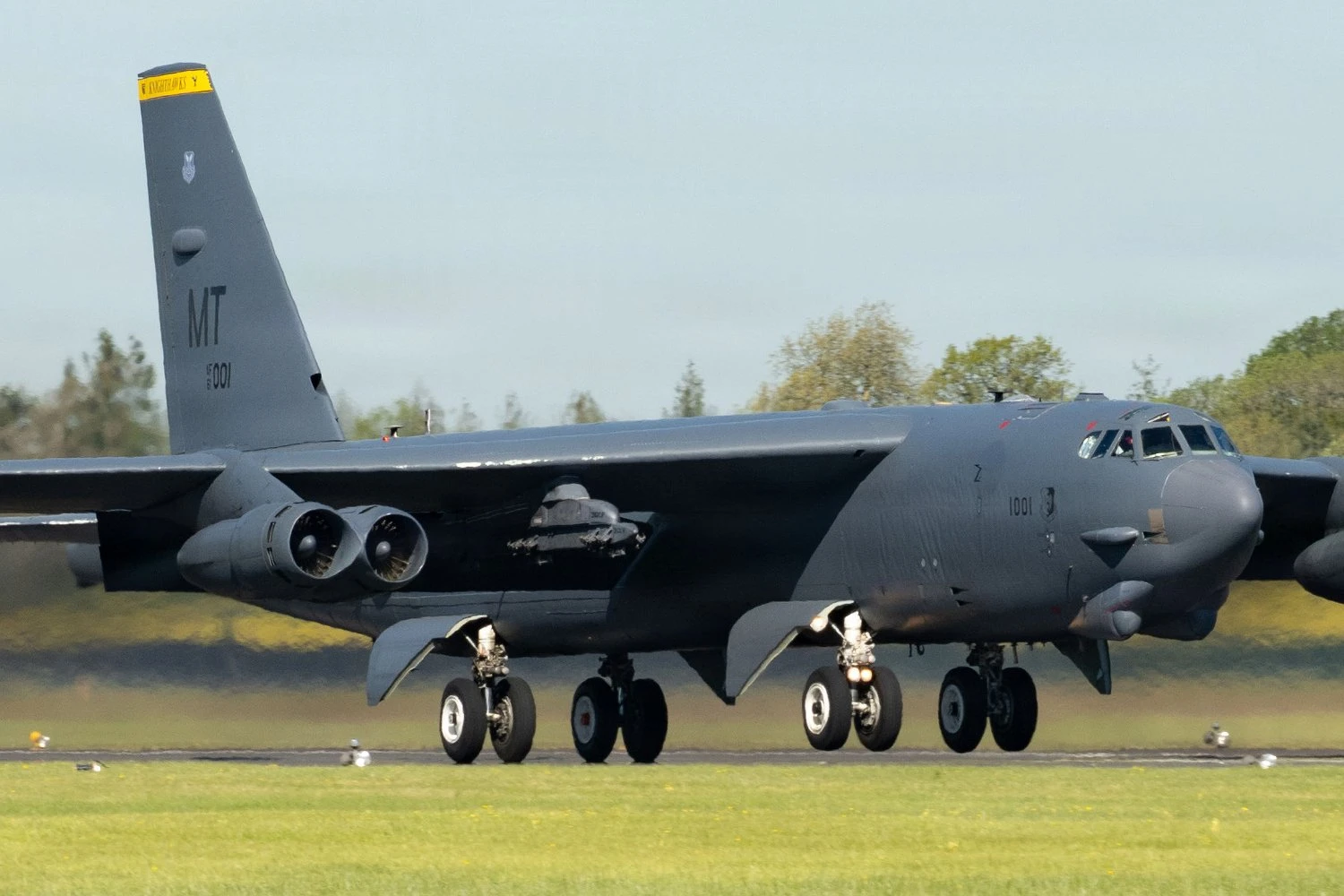
The U.S. Air Force has established a $20.2 billion total acquisition cost for the B-52 Commercial Engine Replacement Program (CERP), a major modernization effort designed to keep the legendary B-52 Stratofortress operational through the 2050s. The program received Milestone B approval on June 1 and has now entered the Engineering and Manufacturing Development phase.
Under the program, the B-52’s aging Pratt & Whitney TF33 engines will be replaced by Rolls-Royce F130 engines. The bomber will retain its distinctive eight-engine configuration, while supporting systems including hydraulic pumps, generators, cockpit displays and flight systems will also be modernized. The upgraded aircraft will eventually be designated the B-52J.
The $20.2 billion figure covers research and development, testing, procurement and military construction, with $2.6 billion already spent since 2018. The Air Force has also completed extensive testing to address technical challenges, including airflow issues around the redesigned engine nacelles and inlets.
Alongside the engine replacement, the B-52 is receiving a new AN/APQ-188 AESA radar, replacing its legacy analog radar. The radar modernization program received Milestone C approval in August and has entered low-rate initial production. Together, these upgrades are intended to provide greater reliability, electrical power and modern sensing capabilities for decades of continued service.
Two B-52 aircraft have been selected as dedicated test aircraft and are scheduled to move to Boeing’s San Antonio facility in the coming months for simultaneous engine and radar modifications. The Air Force says the B-52’s airframe remains structurally capable of supporting the new systems and decades of additional operations.
