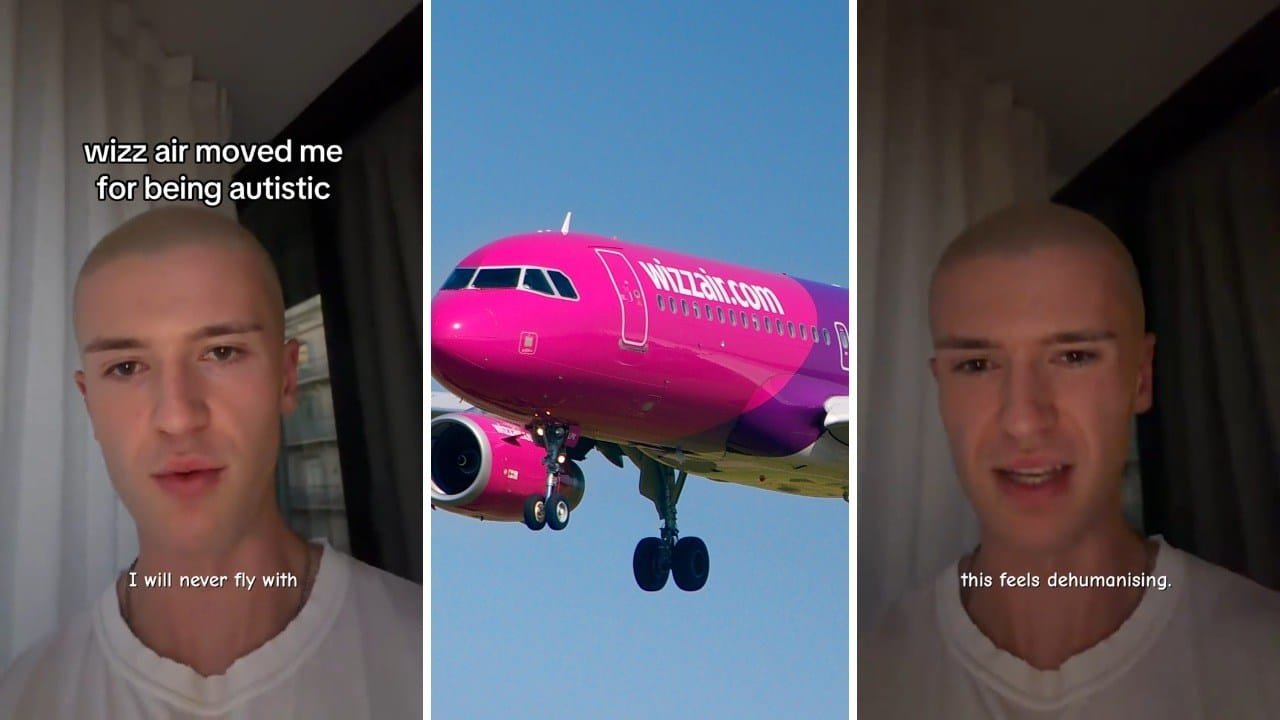
Wizz Air is facing criticism after autistic influencer Luke Grosch claimed he was removed from an emergency exit-row seat because of his autism, despite initially confirming that he was willing and able to assist during an emergency.
Luke, who shares his experiences as a neurodivergent person on Instagram, said cabin crew initially offered him the exit-row seat because of his height. After asking whether he could help in an emergency, the crew received his confirmation. However, when Luke explained that he used headphones to manage sensory overload, the situation reportedly changed.
According to Luke, a second crew member later told him he had to change seats because they could not trust him to assist during an emergency, specifically citing his autism. Luke questioned why his diagnosis alone made him unsuitable, but eventually agreed to move to avoid delaying the flight.
Wizz Air apologised for the upset caused, suggesting there may have been a misunderstanding regarding headphones and the requirement for exit-row passengers to hear and follow crew instructions. The airline also said it was following up with the crew to understand how the decision was made. However, its response attracted criticism for focusing on the headphones rather than directly addressing Luke’s allegation that autism was the reason for his removal.
The incident has also raised questions about how airlines assess neurodivergent passengers. Under EU Regulation 965/2012, passengers in emergency exit rows must be capable of understanding instructions and assisting during an evacuation. While certain disabilities may make passengers unsuitable, autism is not specifically listed as an automatic disqualification.
The key question is whether Luke was individually assessed on his ability to perform the required safety duties or whether the decision was based solely on his autism diagnosis. The incident has renewed calls for clearer airline policies and better staff training on neurodiversity.
